Tentacular
Play Tentacular
Tentacular Screenshots
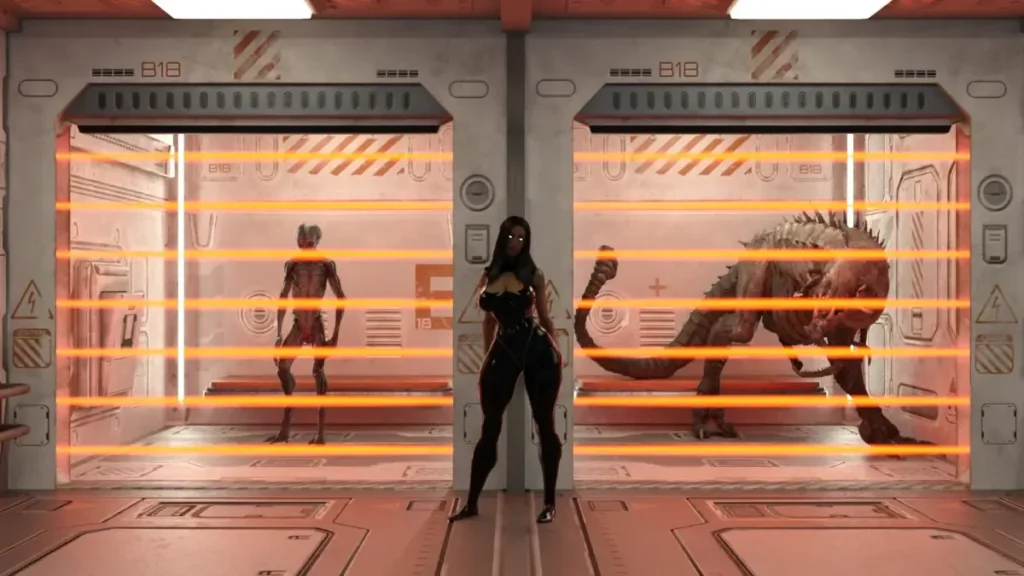


Tentacular review
Explore the unique gameplay, mechanics, and charm of Tentacular
Tentacular is a captivating VR game that combines physics-driven puzzles with a charming narrative, putting you in the role of a playful Kraken. From manipulating tiny objects to lifting massive structures, this game offers a unique blend of delicate precision and immense power. If you’re curious about how Tentacular works, what makes it special, and why it’s worth trying, this article will guide you through its core features and gameplay experience.
Understanding Tentacular’s Gameplay Mechanics
Remember that feeling in VR when you’re trying to pick something up and your digital hand just phases through it, or you knock over everything on a table? 🙈 Yeah, me too. For years, I thought that was just part of the deal—a necessary trade-off for being inside a digital world. That is, until I wrapped my mind (and my hands) around Tentacular gameplay.
This isn’t just another puzzle game you play with your hands; it’s a game where your hands are the stars of the show. 🐙 Tentacular throws out the old rulebook of awkward VR interactions and gives you two magnificent, powerful, and surprisingly graceful tentacles. The core magic, and the heart of the Tentacular gameplay loop, is learning to think and move like the friendly kaiju you are.
How Tentacles Control the Game World
From the moment you start, the connection is immediate and intuitive. Your two tentacles are mapped in a stunningly direct way to your VR controllers. Reach out in real life, and your tentacle tip reaches out in the game. Curl your finger, and the end of your tentacle curls with it. This isn’t an approximation; it’s a 1:1 translation of intent into action, creating the most authentic VR tentacle controls I’ve ever experienced.
The genius lies in how this simple premise branches into multiple, nuanced ways to interact. You have two primary modes of operation, and switching between them becomes as natural as breathing:
- The Pinch: Need to delicately place a battery, thread a rope, or carefully position a fragile ornament? A gentle pinch gesture with your controller activates the precision grip mechanics. Your tentacle tip becomes a surgeon’s tool, allowing for meticulous control. I once spent a hilarious ten minutes just carefully stacking teacups into a wobbly tower, just because I could.
- The Grab: Now, need to lift a car, hurl a shipping container, or tear a roof off a building? 😤 Make a fist. Instantly, your tentacle engages a powerful, full-length grip. It anchors along the entire length of the object, letting you wield massive weight with satisfying heft. The shift from delicate pinching to mighty grabbing is the soul of Tentacular gameplay.
This duality is your entire toolkit. To help visualize how these core VR tentacle controls translate into play, here’s a breakdown:
| Control Mechanic | Gesture | Primary Function | In-Game Example |
|---|---|---|---|
| Precision Grip | Pinch (Trigger/Grip) | Fine manipulation of small objects | Placing a fuse, typing on a tiny keyboard, tying a knot. |
| Power Grip | Full Fist (Grip Button) | Lifting, throwing, and anchoring large objects | Moving construction girders, throwing power cores, anchoring to climb. |
| Tentacle Coiling | Wrist Rotation & Movement | Wrapping around objects for stability | Securing a wobbly bridge plank, getting a better angle on a heavy lift. |
| Dynamic Anchoring | Grip + Pull Motion | Movement and traversal across the environment | The essential Tentacular climbing mechanic to scale cliffs and buildings. |
Mastering Precision and Strength in VR
The real test of any control scheme is whether it gets out of the way of your creativity. In Tentacular, the controls are the creativity. Those precision grip mechanics I mentioned aren’t just for show—they’re essential for solving the game’s brilliant physics puzzles VR is famous for.
One puzzle early on had me stumped. I needed to get a power cable from point A to point B, but it was too short. The solution? Use my tentacles to physically tie two cables together with a knot. 🪢 I kid you not, I had to learn a simple overhand knot in VR! Using the pinch grip, I carefully looped one cable end, threaded the other through, and pulled tight. The physics responded perfectly, creating a secure connection. In that moment, I wasn’t just “solving a puzzle”; I was crafting a solution with my own two… appendages.
Conversely, the game constantly presents you with obstacles that demand brute force. But even this is a puzzle. You can’t just flail. You need to think about leverage, grip points, and trajectory. Lifting a giant engine block requires you to find a good center of mass, wrap your tentacles securely around it (using that full fist grab), and steadily heave. The interactive VR environment reacts with creaks, groans, and wonderfully predictable physics. Throwing that same block onto a distant switch is a skill shot of power and angle. It’s this beautiful dance between surgeon and demolitions expert that makes the Tentacular gameplay so endlessly engaging.
Exploring Interactive Physics and Environment
This brings us to the stage where all this mechanical prowess plays out: a gorgeous, lively VR physics sandbox. Tentacular’s islands aren’t just pretty backdrops; they are toyboxes filled with reactive, interlocking parts. Every crate, rope, vehicle, and building piece behaves exactly as your intuition says it should. This transforms every challenge from a scripted sequence into an emergent playground.
The Tentacular climbing mechanic is the perfect example of this physics-driven design. To climb, you don’t press a button. You look at a ledge, a windowsill, or a rock face, reach out, and grab it with your power grip. Then, you pull. Your entire body moves dynamically as you find your next anchor point. It feels less like a canned animation and more like genuine, effortful climbing. I’ve often found myself at the top of a radio tower I scaled just for the view, not because the game told me to. 🧗
This sandbox philosophy means there’s rarely just one solution. A puzzle might ask you to bridge a gap. You could:
* Carefully lay out the planks provided.
* Toss a giant metal sheet across instead.
* Or even string up a chaotic web of ropes and girders that somehow, miraculously, holds together.
The interactive VR environment encourages this experimentation. Objects have weight, friction, and collision. You can pile things up, topple structures, and create glorious messes. It’s a world that feels truly present and responsive to your tentacular touch.
Ultimately, Tentacular gameplay is a masterclass in VR design. It understands that immersion doesn’t come from just looking at a world, but from being able to touch, manipulate, and truly inhabit it with believable physicality. By mastering the elegant VR tentacle controls—the delicate pinch and the mighty grab—you unlock a VR physics sandbox brimming with charm and challenge. It’s a game that makes you feel incredibly powerful and playfully clumsy all at once, and it stands as one of the most uniquely joyful and inventive physics puzzles VR experiences available. Now, if you’ll excuse me, I have a distant island to reach, and I think if I swing from that crane just right… 😏
Tentacular offers a fresh and engaging VR experience by combining innovative tentacle controls with a physics-rich environment. Its unique gameplay mechanics encourage creativity and skill development, making each interaction feel meaningful and fun. Whether you enjoy puzzle-solving or immersive sandbox play, Tentacular delivers a memorable adventure that stands out in the VR landscape. If you’re ready to explore a world where your tentacles bring the environment to life, Tentacular is definitely worth diving into.