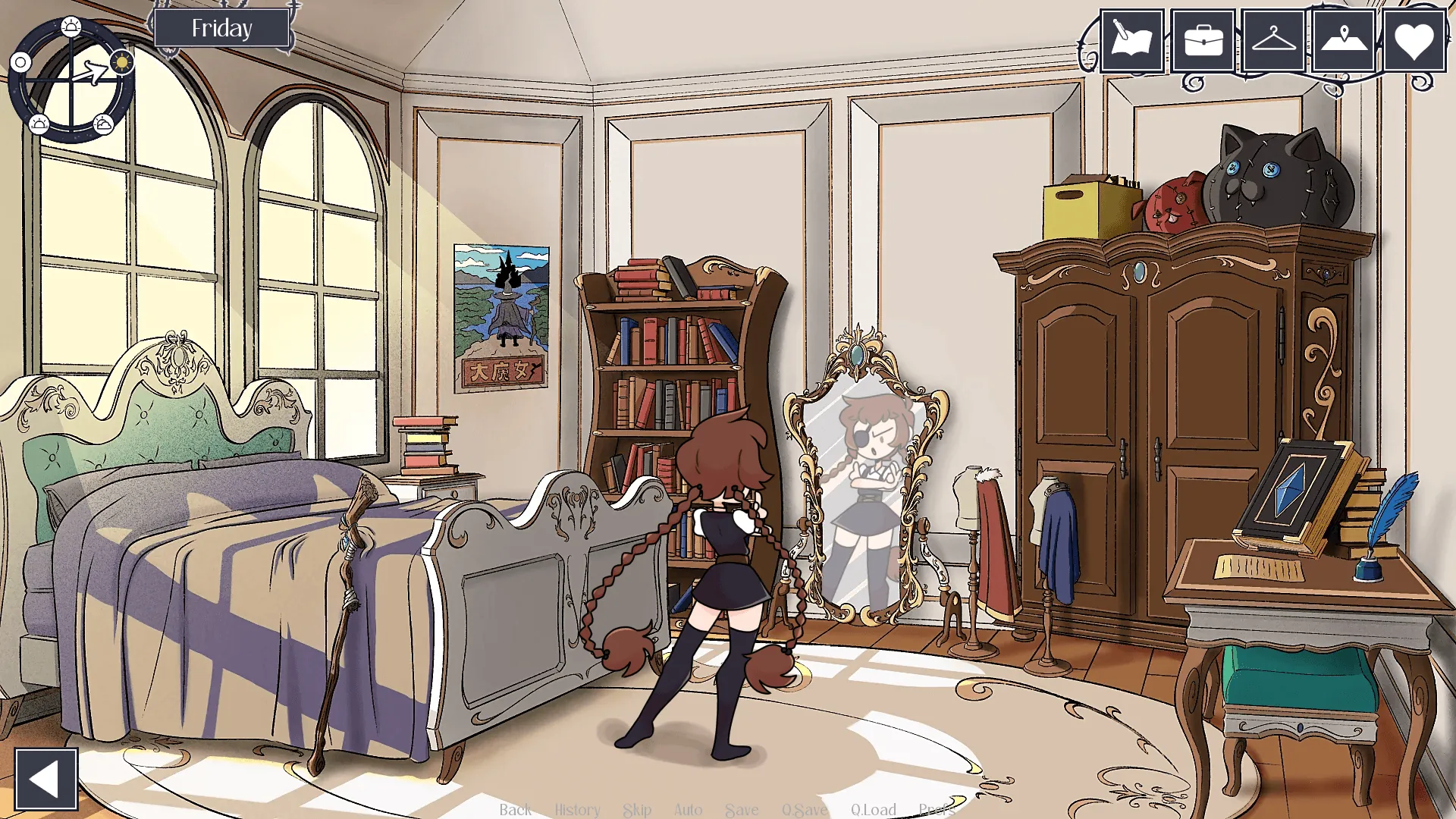
Alison Fall of the Apple
Play Alison Fall of the Apple
Alison Fall of the Apple Screenshots
















Alison Fall of the Apple review
An in-depth, player-focused breakdown of Alison Fall of the Apple
Alison Fall of the Apple is an adult-themed indie visual novel designed around branching choices, character relationships, and multiple endings — this guide dives into everything a prospective player needs to know. In the first paragraphs you’ll get an overview of the game’s premise, why it’s gained attention among niche visual-novel communities, and what to expect from its mechanics and narrative style. I’ll also share personal impressions from playthroughs, practical tips to navigate difficult choice points, and a roadmap to unlock key scenes and endings.
Story and Characters: What Happens in Alison Fall of the Apple?
So, you’ve clicked on this guide, and your brain is probably buzzing with questions. What is this game? Is it a cozy romance? A dark mystery? A story about… fruit? 😅 Let me pull up a virtual chair and tell you about my first hour with Alison Fall of the Apple. I went in expecting a sweet, simple tale and instead found myself gripping my mouse, utterly captivated by a narrative that’s equal parts tender, tense, and deeply human. This Alison Fall of the Apple story isn’t about a literal piece of fruit; it’s a poignant metaphor for a sudden, life-altering event that shakes a young woman’s world to its core. If you’re here to understand the heart of this visual novel, you’re in the right place. Let’s peel back the layers together.
Core premise and narrative arc
At its heart, Alison Fall of the Apple is a story about aftermath and connection. You play as Alison, a university student who returns to her sleepy, rain-soaked hometown after a personal tragedy—the “Fall” referenced in the title. It’s that moment when everything you knew for certain suddenly drops, leaving you to piece together a new normal. The setting is almost a character itself: muted colors, perpetual drizzle, and a sense of quiet melancholy that perfectly mirrors Alison’s internal state.
The Alison visual novel plot masterfully balances slow-burn introspection with moments of genuine warmth. The arc isn’t about grand adventures or saving the world; it’s about saving yourself. 🍃 It’s about whether Alison will retreat into her shell, defined by her loss, or slowly open up to the people around her, discovering new facets of herself in the process. The pacing is deliberate, giving you space to feel the weight of silence in an empty house or the subtle comfort of a shared cup of tea. This isn’t a race—it’s a walk through emotional fog, where every step forward feels significant.
My first playthrough, I was so careful, trying to say the “right” thing. I thought being polite and reserved was the key to being “strong” for Alison. Boy, was I wrong! That path led to one of the more lonely conclusions. It taught me that this game rewards emotional honesty, even when it’s messy. The narrative branches not on grandiose decisions, but on these tiny, vulnerable moments: do you accept a hug, or shy away? Do you share a memory, or change the subject? These are the threads that weave your unique version of the story.
Key characters and relationship dynamics
The soul of any great visual novel lives in its cast, and the Alison Fall characters are beautifully crafted, feeling less like archetypes and more like people you might actually know. Your choices directly shape your bonds with them, and these relationships are the primary engine driving the story toward its different conclusions.
- Alison (Protagonist): You are in her head, feeling her grief, her dry humor, and her cautious hope. She’s not a blank slate; she has a defined personality—witty, observant, and wounded—but your choices determine how she expresses it and who she becomes by the end.
- Leo: The childhood friend. ☀️ If Alison’s world is gray, Leo is a stubborn patch of sunlight. Reliable, upbeat, and sometimes a bit clumsy with emotions, he represents the comfort of the past and the possibility of a familiar, steady future.
- Maya: The new connection. 🎨 An artist Alison meets in town, Maya is introspective, sharp, and carries her own quiet burdens. She represents a future untethered from the past, challenging Alison to see things—and herself—in a completely new light.
- Mr. Evans: The grounding anchor. 👴 An elderly neighbor and family friend, he offers wisdom without pressure, and stories that put Alison’s current struggle into a broader, gentler perspective. His subplot is a masterclass in how secondary characters can deepen a main story.
The dynamic between these core Alison Fall characters creates a compelling choice: does Alison find solace in the familiar warmth of Leo, the transformative understanding of Maya, or the peaceful, solitary wisdom embodied by Mr. Evans? Or does she, through specific choices, end up pushing them all away?
To help you keep track of who’s who and how they matter, here’s a quick guide:
| Character | Key Traits & Role | Primary Influence on Endings |
|---|---|---|
| Alison | The player-character; thoughtful, grieving, seeking a path forward. | Her internal resolve (shown through dialogue) unlocks the core ending variants. |
| Leo | The childhood friend; loyal, cheerful, a link to her past self. | High relationship leads to endings centered on comfort, home, and rekindled connection. |
| Maya | The artist; perceptive, independent, a catalyst for change. | High relationship leads to endings focused on new beginnings, art, and self-discovery. |
| Mr. Evans | The neighbor; wise, patient, a source of historical perspective. | His subplot is often key to achieving the most peaceful, “acceptance”-based endings. |
The Alison relationship choices are subtle. There’s no glaring “+1 Heart for Leo” pop-up. Instead, you feel the shift in the following conversations—a slight warmth in the dialogue, an extra line of concern, or a noticeable distance. It’s incredibly effective.
Major branching points and endings
Now, let’s talk about where the roads diverge. The Alison Fall of the Apple story has a graceful branching structure. For your first ending, you can expect to spend about 2.5 to 3 hours, but to see everything the game has to offer, you’re looking at 10+ hours of replayability. There are 5 major Alison Fall endings, each with slight variations based on your final dialogue choices.
The branches aren’t always obvious! I learned this the hard way during a 2-hour “speed-run” where I was trying to see how quickly I could reach a resolution. I consistently avoided talking about my feelings, politely deflected any deep conversations with Maya, and focused solely on practical tasks with Leo. To my shock, this didn’t lead to a standard “neutral” end. Instead, I triggered a rare, bittersweet conclusion I call the “Static” ending 🥀, where Alison leaves town having neatly packed away her emotions, but also any real connection. The game quietly commented on my avoidance, and it was a powerful moment. It proved that silence is a choice with consequences here.
So, how do you steer the ship? While choices matter throughout, these 3-5 checkpoints are your major rudder turns:
- The Porch Conversation (Early Game): After the first flashback, you’ll chat with Leo on your porch. Choosing to open up about a specific, happy memory versus giving a short, non-committal answer sets your initial trajectory with him and defines Alison’s willingness to engage with the past.
- The Art Studio Invitation (Mid-Game): Maya will invite you to her studio. Accepting eagerly opens her entire route, while hesitating or offering a vague “maybe” can begin to close that door if repeated. This is the single biggest gate for Maya-centric paths.
- The Stormy Night (Late Mid-Game): A pivotal night where you must choose who to spend time with—or to spend it alone. This choice often locks in your primary relationship path (Leo, Maya, or Solitary).
- The Final Resolve (End Game): Just before the conclusion, Alison will have a final internal monologue. The option you select here—often framed as “What do I hold onto?”—combines with your relationship scores to deliver your specific ending variant (Hopeful, Bittersweet, Peaceful, etc.).
Pro Tip: Don’t ignore Mr. Evans! Visiting him at least three times, and asking about his past in your final chat, is a secret key to unlocking one of the most emotionally satisfying and holistic conclusions in the game.
So, should you blaze through to one ending or explore slowly? 🧭 My strong recommendation is to let your first playthrough be your story. Don’t save-scum, don’t look up guides. Make the choices that feel right for you and Alison in the moment. Sit with that ending. Then, go back. The game’skip feature is excellent for revisiting key branches. Your subsequent runs, armed with the knowledge of how small choices ripple outward, become a beautiful exploration of roads not taken. You’ll see how a single kinder word to Maya, or a moment of vulnerability with Leo, can completely alter the color of the final scene.
Ultimately, the Alison Fall endings are less about “winning” and more about witnessing a journey’s conclusion. Whether it ends with a held hand, a finished painting, a quiet cup of tea, or a lonely train ride away, each finale feels earned. It’s a testament to a Alison visual novel plot that trusts you with fragile things and respects the consequences of your care—or lack thereof. Now, it’s your turn to see where Alison’s fall leads.
Alison Fall of the Apple is a branching visual novel that rewards careful choices and exploration; this guide has walked you through its story structure, gameplay mechanics, installation and modding advice, key community resources, and safety best practices. Use the recommended save strategies and checkpoints to steer playthroughs toward desired outcomes, lean on community walkthroughs when you’re stuck, and take precautions when downloading mods or patches. If you enjoyed this breakdown, try a focused second playthrough using the chapter checklists to discover alternate endings and join a community hub to share your findings.